MVP development

The point of the MVP is to find out whether the idea works with the least amount of money possible. That means fewer features than you have in mind, built well enough that real users and real investors take it seriously.

We have been building first versions since 2011, and the best advice we ever gave a founder was to spend £100,000 less than they had planned.
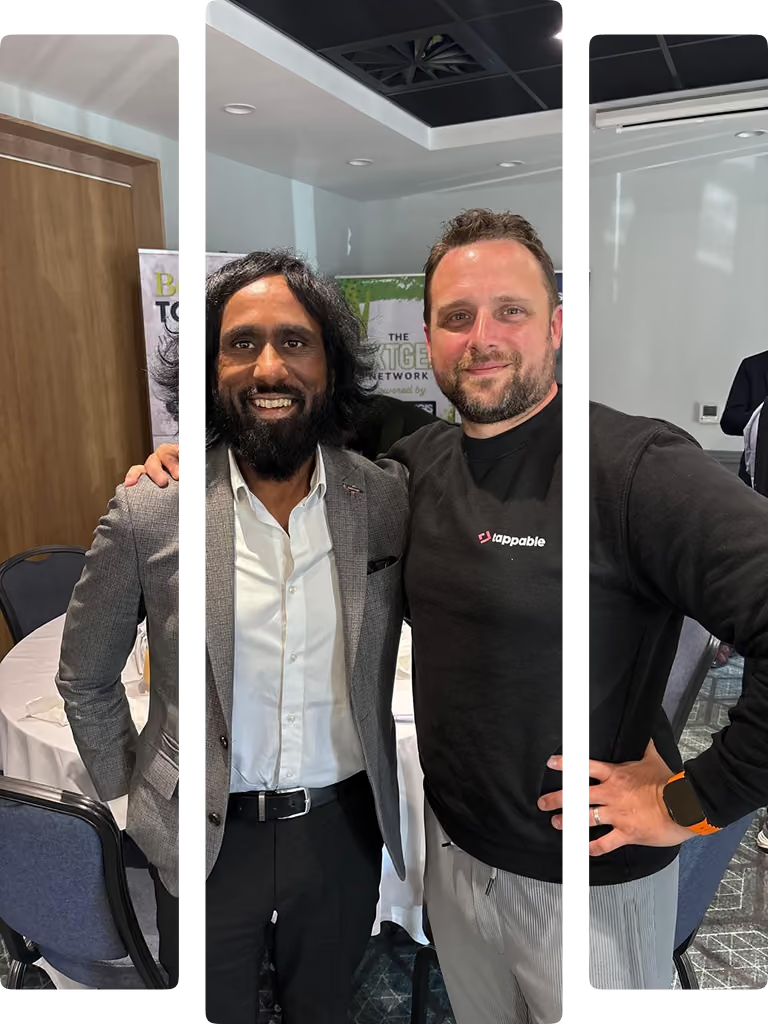
Two men smiling and posing with arms around each other in an indoor event space.Two men smiling and posing with arms around each other in an indoor event space.

What we mean by minimum

Most MVP briefs contain three products. The work is choosing the one that tests the riskiest assumption, shipping it, and letting evidence decide the rest.
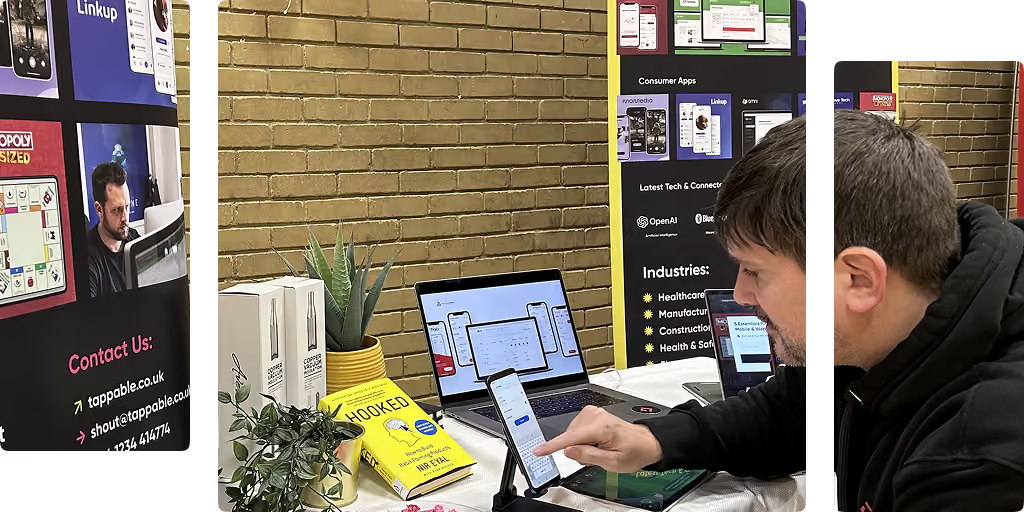
Man using a smartphone on stand at a booth with laptops, books, and promotional banners.Man using a smartphone on stand at a booth with laptops, books, and promotional banners.

You get a working product in users’ hands, data you can put in front of investors, or prove to the business it works, and a codebase that survives success rather than needing a rewrite the moment traction arrives. No-code tools can get you a demo. They rarely get you a business, and we will tell you plainly which side of that line your idea sits on.

What an MVP build includes

Silhouetted group in business meeting with two men shaking hands against yellow background.
01

Discovery and scope: the assumption to test, the features that test it, and a firm line under everything that waits

Silhouette of a woman sitting at a table, writing on a notepad next to an open laptop in a minimalist room.
02

Design that looks credible on day one, because users judge in seconds and investors are users too

Silhouettes of a man and woman facing each other, both looking at their smartphones.
03

The build itself, on iOS, Android or the web, on foundations that scale

Silhouettes of three people working at a desk with three computer screens against a green background.
04

Launch support, analytics wired in from the start, and a plan for the version after this one

For founders, and for established businesses

About half our MVP work is startups. The other half is established companies testing a new product line without betting the company on it. The discipline is the same either way: build the smallest thing that answers the question, and get it in front of real users quickly.
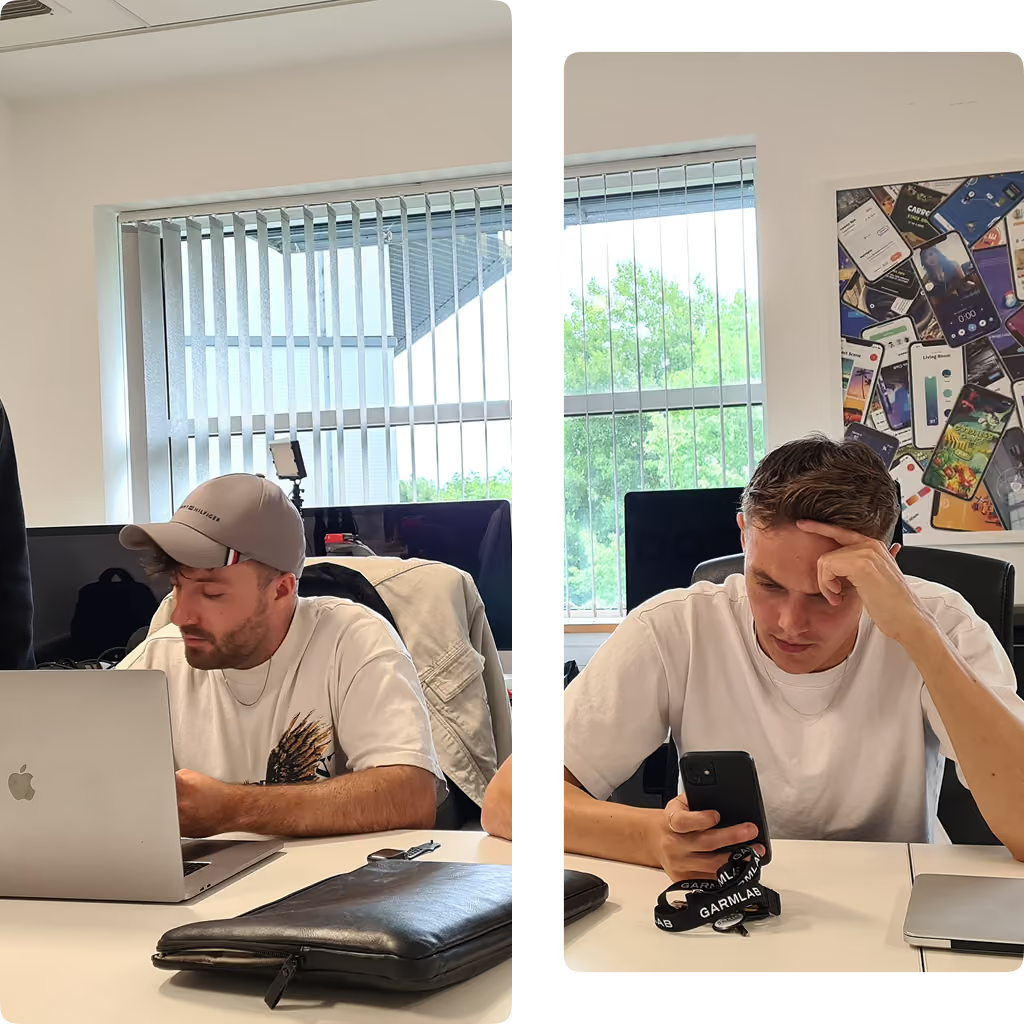
Two men at a table in an office, one working on a laptop, the other looking at a phone.

What it costs

An MVP runs £15,000 to £40,000 excluding VAT, typically 8 to 12 weeks. You will see lower numbers quoted elsewhere, and they usually describe a demo rather than a product you can build a business on. Full ranges are on the cost guide.
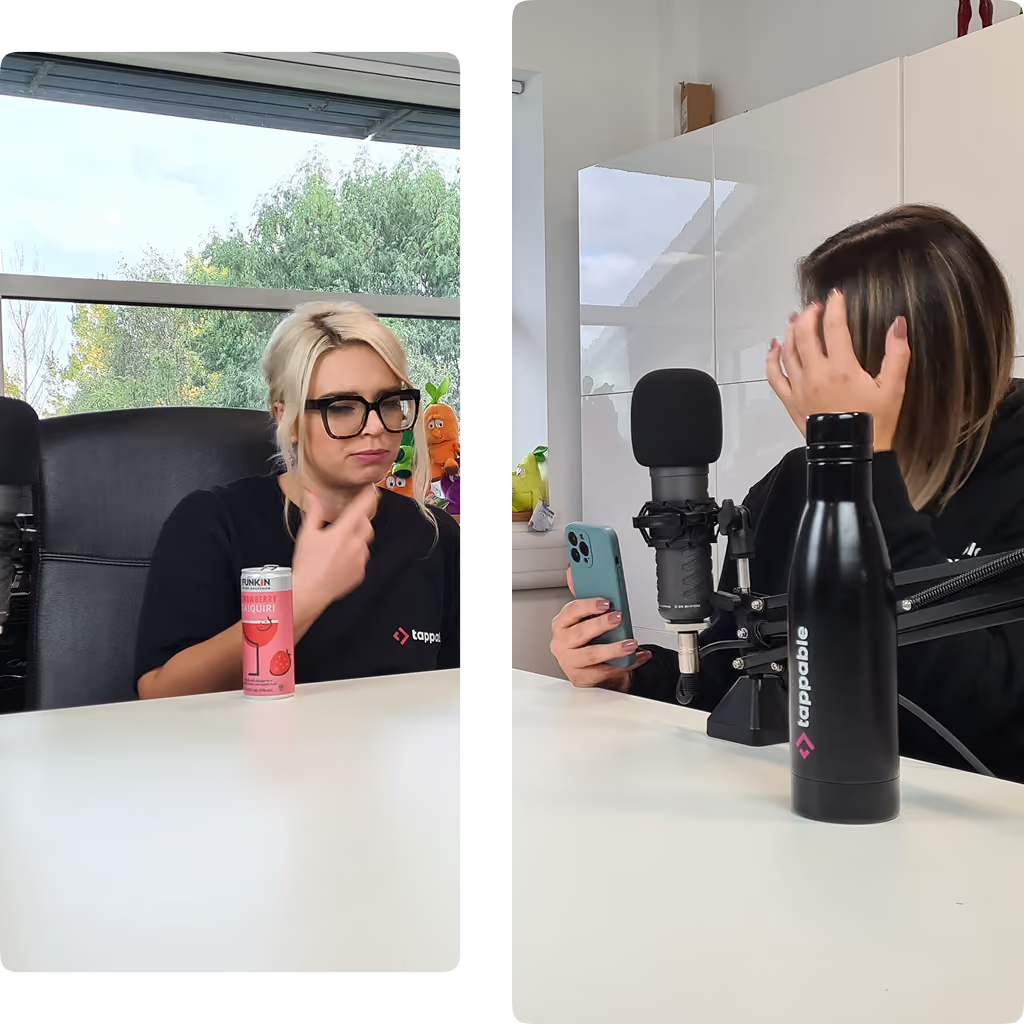

Two women in podcast studio, one with phone and black tappable bottle, the other with drink can.

Projects that speak for themselves

Common questions

How much does an MVP cost in the UK?
Between £15,000 and £40,000 excluding VAT for a first version built well enough that real users and investors take it seriously, typically 8 to 12 weeks. Market guides quote £5,000 to £30,000, and the bottom of that range buys a prototype rather than a product.
How long does an MVP take?
Usually 8 to 12 weeks. What sets the timeline is scope, and the shorter the feature list, the sooner you learn something you can act on.
Will investors take an MVP seriously?
Yes, when it is built properly. A live product with real usage data beats a deck every time.
What if it works?
Then the foundations matter. We build MVPs on the same stack as our full products, so scaling is a roadmap conversation rather than a rebuild.
Should I use no-code instead?
Sometimes, and we will say so if that is the answer. No-code is a good way to test whether anyone wants the thing at all. It runs out of road once you need real integrations, real data volumes or an app store presence, and rebuilding from it costs more than starting properly would have.

Contact us

If you're ready to build a mobile app that gets opened, used, and remembered—we're ready to help.

Please type at least two characters
Please use a valid email format (e.g. example@mail.com)
Please type at least two characters
Thank you
Your submission has been received
Close
Something's not right
Please try submitting the form again
Close

Book a strategy call. Bring the idea, and we will help you find the smallest version of it worth building.