Tappable has been building software products since 2011. We have a reputation worth protecting. Most of our clients don’t leave.
About us
Track record
0
1
A healthcare prototype that led to an acquisition
Built the product that gave investors enough confidence to buy the business
0
2
A live game-show system that raised £3M for ITV
Real-time audience participation, broadcast scale, live money on the line
0
3
Connected device apps for dishwashers, home chargers and guitar amps
If it connects to a phone, we’ve probably built something like it
0
4
Product strategy that helped a UK life sciences company get acquired
Upstream thinking, not just delivery
0
5
The in-venue tech behind Monopoly Lifesized in London
Consumer experience at a physical venue, built to handle volume
0
6
Investor and advisor to startups doing good
Through Exceptional Ventures, we back founders working on things that matter
Executive team

Sam Furr
CEO & Co-Founder
Sam has been building and leading product teams for fifteen years. His focus is the commercial call: what to build, what not to build, and where the real value sits. He started Tappable as part of a BBC TV show in 2011.

Raj Singh
Co-Founder
Raj has built and exited several startups, with deep experience in FinTech. He leads on commercial strategy and knows what good looks like from both sides of a deal. He built the UK’s first short-term small loan consumer finance business.
Andy Sweet-Roe
CTO
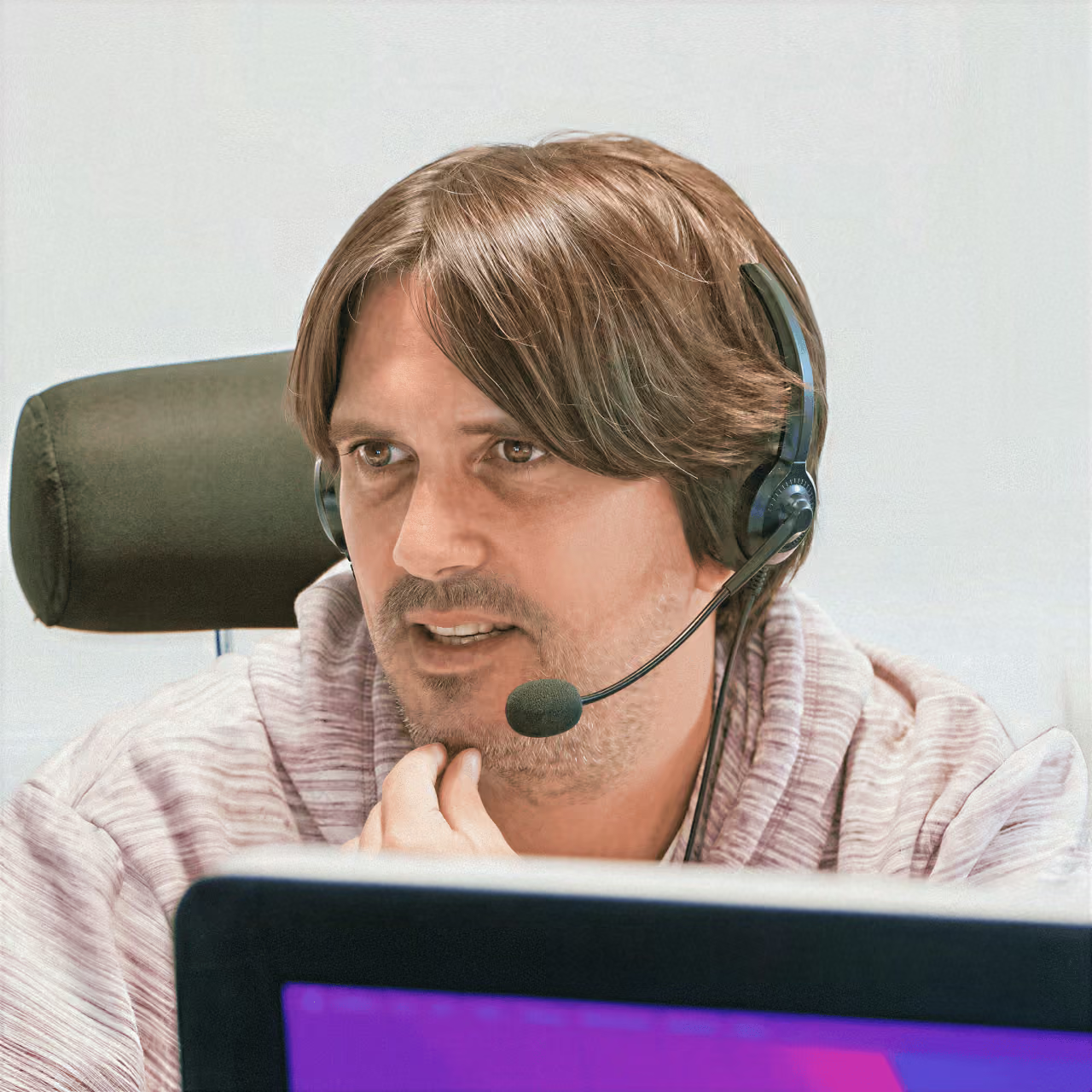
Andy has been running technology teams for thirty years across web and mobile. He sets the technical direction and makes sure the architecture matches the ambition. He led the first iteration of the Oyster card project.

Rory McCrossan
Tech Lead
Rory specialises in regulated and compliant systems delivery, with Microsoft infrastructure at his core. He single-handedly built the first version of the live game-show system that raised £3M from ITV.
How we think
Six things we believe about building software that's worth building. They've shaped how we work, what we say yes to, and what we don't. None of them are revolutionary. Most of them are things we wish were said more often.

01
The brief you arrive with is rarely the brief you leave with.
Most clients come to us with a half-formed picture of what they want, and that's normal. They're running a business, not building software. Our job is to help sharpen the picture before anyone starts building from it. The reframe is the work, and it's usually where the value lives.

02
Anyone can write code now. Deciding what to write is the expensive part.
The bottleneck in modern software isn't engineering capacity. It's judgement. What's worth building, what isn't, what order, at what cost. We lead with that thinking because it's the work that determines whether the build is worth doing at all.

03
The honest conversation up front saves the painful one in month four.
The realistic picture is what we lead with, even when it isn't a pretty one. We'd rather quote honestly and lose a deal than win it on a number we know will move. If the budget doesn't work for the scope, we say so. If the scope is wrong for the budget, we say that too. Clients who can handle that conversation are the ones we want.

04
The smallest version that proves the case beats the biggest version that hopes to.
Most clients arrive with a scope bigger than their first version needs to be. We help themnarrow it. Not because small is virtuous, but because shipping a sharp V1 and learning fromreal users beats shipping a sprawling V1 and hoping. Scope discipline isn't a constraint. It'show good products get built.

05
Outsider eyes are part of what you're paying for.
Clients sometimes worry we don't know their industry well enough to make credible calls. The honest answer is that we know enough to do the work, and the distance is part of the value. People inside an industry see what's always been there. People outside it see what doesn't have to be. We hold both, and that's how we end up in the rooms where the better questions get asked.

06
Doing exactly what you're asked is rarely doing the job properly.
Clients don't come to us because they need extra hands. They come to us because something they're trying to do isn't working, hasn't been built yet, or could be done better. Treating the brief as a fixed instruction rather than the start of a conversation is how studios produce work nobody's proud of. We'd rather have the awkward conversation early than build something neither of us is happy with.