Business systems and internal platforms
We build the system that breaks these links. The work gets recorded once, held as one complete record, tracked to completion and billed from the same data, so the business can take on more without the admin growing with it. Processes and ops can scale, with technology doing some of the heavy lifting.
It is built around how your business actually works rather than how a software product thinks it should.
The problems these systems remove


What a build usually looks like
Every business is different and the systems get assembled from the same few pieces.
At the centre is one complete record of whatever your business actually handles: a job, an order, a case, a client, a property. Everything attaches to it, so the record is the whole story rather than the part that fitted on the form. Information goes in once, entered by whoever is closest to it, with the rules travelling with it, so the half-finished version never gets submitted and nobody has to key it into a second system afterwards.
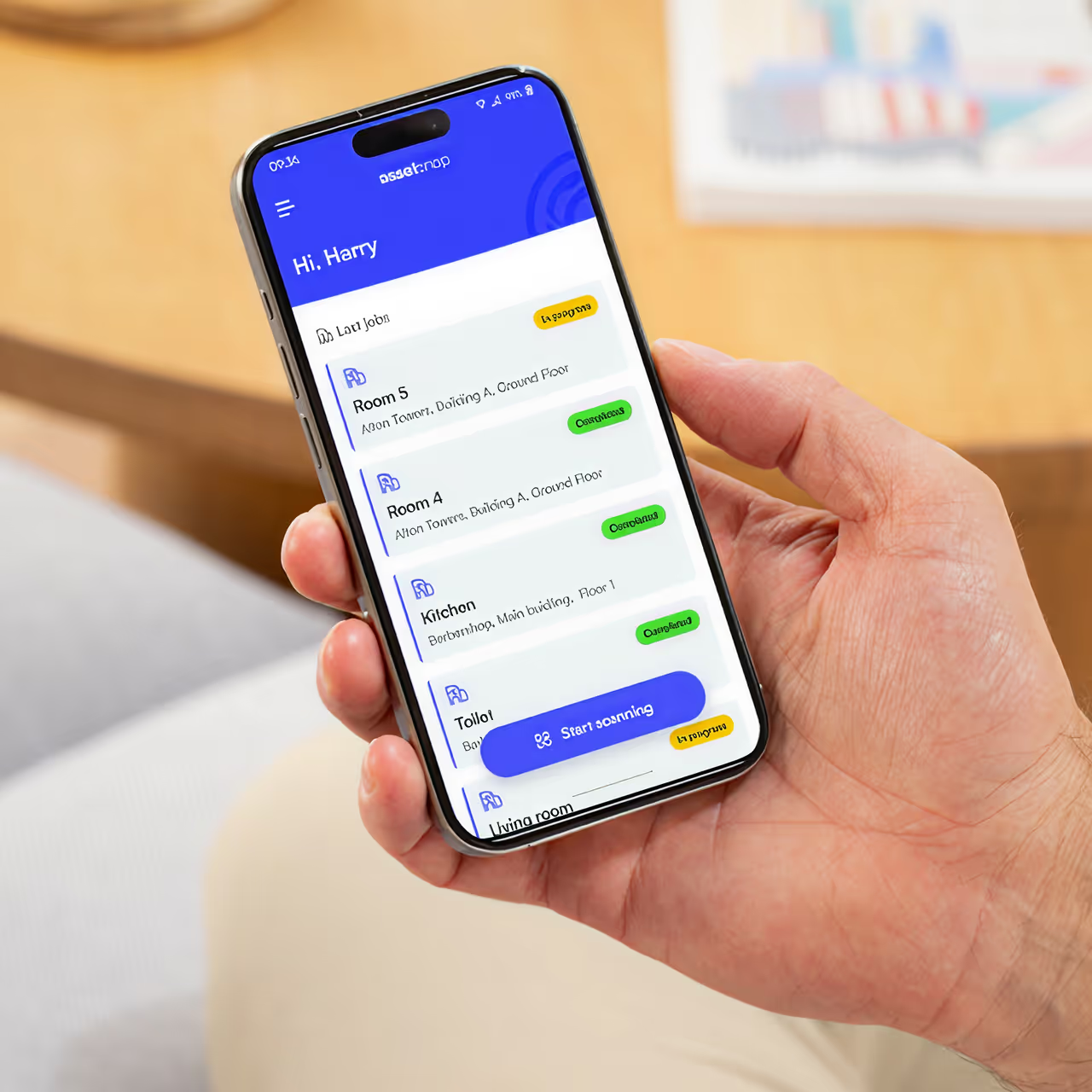
Around that sits the work that used to need a person: assignment and scheduling, the chasing and the reminders, approvals that route to whoever has to sign them off, escalation when something stalls, and the invoice raised from the same record the work was done against. Managers see status without having to ask for it, and the reports that took someone a morning build themselves. It connects to Xero or Sage, your CRM and whatever else you keep, so this is where people work rather than one more subscription to feed.
Sectors we build for
Over 15 years, we’ve touched almost all industries.
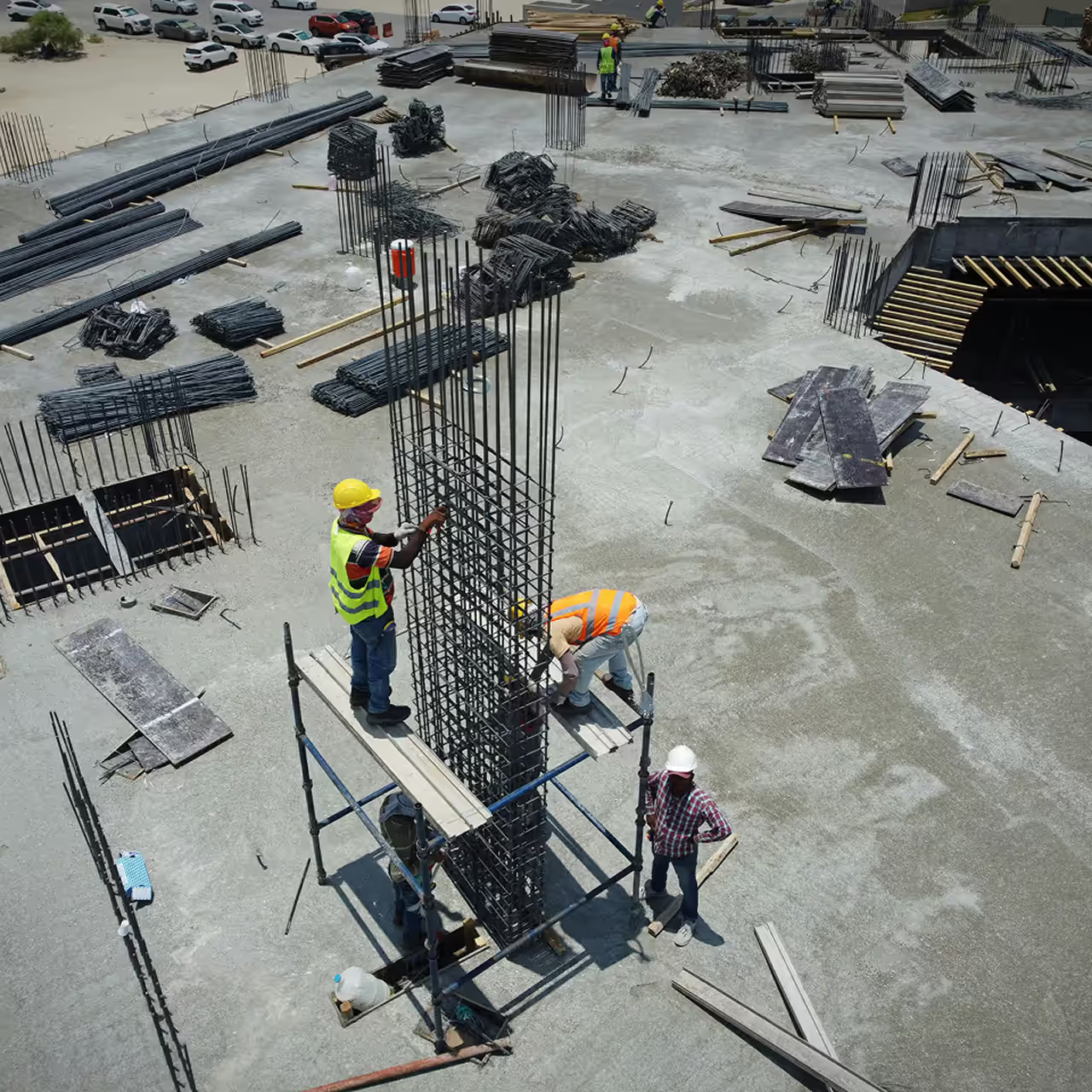
Recently we’ve worked in: construction and groundworks, estates and ground maintenance, manufacturing, field service and engineering, healthcare and clinical operations, and pharmacy. What these have in common is the shape of the problem rather than the sector: work happens away from a desk, evidence has to be captured while it happens, and somebody in an office is holding it all together by hand.

What it costs
Business systems typically run £15,000 to £60,000 excluding VAT. A first phase is usually 8 to 12 weeks; a full system is 3 to 5 months. What moves the number is integrations with what you already run, whether the field side needs to work offline, and how many different types of user need their own view. Our full breakdown is on the cost guide.
Start with discovery, not a quote
Nobody should commission a system off a hunch, ours included. Discovery is a short, structured look at how work actually flows through your business, and it ends with a plain-English recommendation of what is worth building, what is not, and what it should cost. It is how we start every build, it takes two weeks, and there is no upfront cost. If the answer is that an off-the-shelf tool does most of the job, you will hear that from us.



Common questions
Typically £15,000 to £60,000 excluding VAT, with a first phase usually landing between £15,000 and £25,000. The cost guide sets out what moves the number. Check out how much it costs.