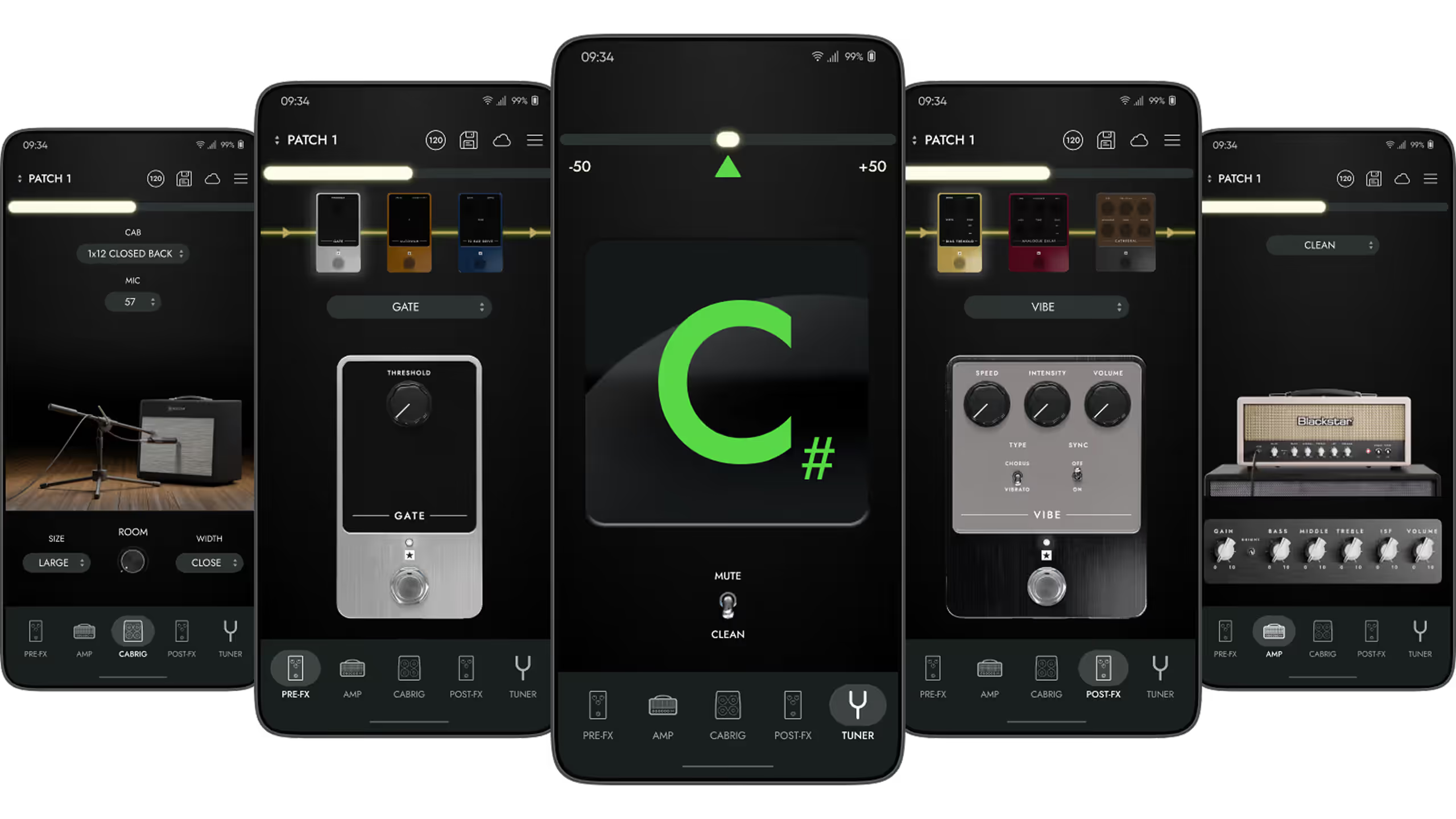
Blackstar Amps, the Northampton amp maker, was building two new products at once: Beam Solo, a headphone amp you plug a guitar into, and Beam Mini, a desktop amp small enough to take anywhere. Both are controlled almost entirely from a phone, so the app is not an accessory to the product, it is most of the product. Blackstar came to us with a clear, well-defined plan for what the app had to do, and a hardware team building the amps at the same time.

The iOS and Android app behind Blackstar’s Beam Solo and Beam Mini: a whole amp controlled from a phone, with 35+ amps, cabs, mics and pedals and a tone library of more than 200,000 captures.
01
The start
A guitar amp with almost nothing on it

02
The journey
Another hardware integration, done properly
The Beam app runs on iOS and Android and connects to the amp over Bluetooth. From it a player picks amps, cabinets, microphones and pedals (more than 35 in the app), shapes the sound with Blackstar’s ISF control and effects, and saves the result as a patch. Patches are sound packs: a setup that makes your guitar sound like a particular player, a particular rig or a particular room, downloadable from Blackstar’s artist library or shared between players in the Beam community. The app also carries a tuner, a metronome, lessons and backing tracks, streams music to the amp over Bluetooth, and through Blackstar’s TONE3000 partnership opens up more than 200,000 community-made amp captures.
The hardware was being finished while the app was being built, so firmware, Bluetooth protocol and app moved together, the same co-development we did on Classeq and Detector Testers.


03
The result
Two products launched, one app between them
Beam Solo and Beam Mini both shipped with the Beam app on the App Store and Google Play, and in the reviews Blackstar quotes on its own product pages the app gets its own line: “The app is a gift that keeps on giving.”
- iOS and Android, one app for both Beam Solo and Beam Mini
- 35+ amps, cabinets, mics and pedals, with exclusive artist patches
- Patch sharing between players, and social sharing
- Access to more than 200,000 amp captures through TONE3000
- Tuner, metronome, lessons and backing tracks
- Bluetooth music playback through the amp