
If you’ve ever asked your dev team for a "simple" change like moving a button or adding a field and been told it will take three weeks because the "foundation needs work," you have a Technical Debt problem.
Most leaders view Technical Debt as a sign of a lazy team or a bad hire. In reality, it is almost always the result of a roadmap that puts launch dates above logic. It is the interest you pay on the shortcuts taken six months ago to hit a deadline.
The "Credit Card" Analogy
Think of your app’s code like a credit card. Every time you force a feature through without letting the team build the proper plumbing, you’re swiping that card.
Eventually, the interest gets so high that your entire monthly budget is spent just paying off the debt. You stop shipping new features because the team is too busy trying to keep the lights on.
Three Signs Your Leadership Style is Creating Debt:
- The "Get it Live" Pressure: Consistently telling a team to "worry about the back-end later" just to show a demo to the board is a deliberate choice to accrue debt.
- Feature Sprawl: Adding five new things before the first three are stable creates a "house of cards" architecture. Eventually, touching one UI element breaks four separate backend flows.
- Zero Maintenance Budget: If 100% of your sprint is dedicated to "new stuff" and 0% to refactoring, your app is decaying in real-time.
How to Fix the Plumbing (Without Stopping the Build)
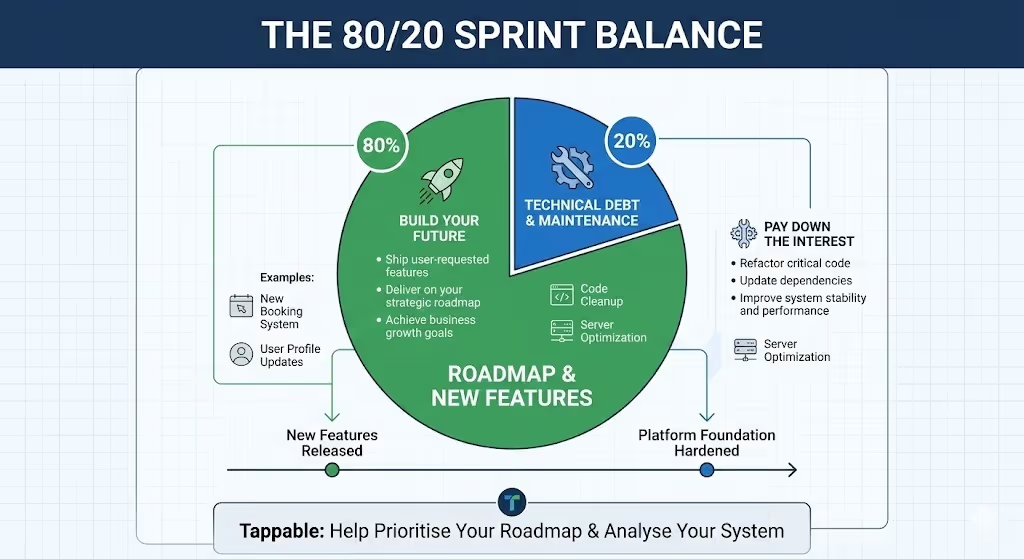
You don't always need to stop development for six months to "rewrite everything." That is often a suicide mission. Instead, you need a disciplined process:
- The 80/20 Rule: Dedicate 80% of every sprint to your roadmap and 20% to paying down the interest. This keeps the foundation solid while you still move forward.
- The "Definition of Done": A feature is only finished when the code is documented, tested, and integrated properly into the existing architecture.
- Focus on Stability: Stop counting closed tickets. Start asking if the system is more or less stable than it was last Monday.
The Bottom Line
Speed is a byproduct of a clean system. If you want your team to move faster in 2027, you have to let them build properly in 2026. Technical debt is a commercial problem. If you own the roadmap, you own the debt.
How Tappable Can Help
If your roadmap feels stuck or your team is struggling to ship under the weight of old code, we can help you find a clear path forward.
We don't just "build apps" here. We help leaders prioritise for the long term. We can jump in to perform a deep-dive System Analysis to identify exactly where your bottlenecks are and help you restructure your roadmap to balance new features with a rock-solid foundation.
Want to see where your technical debt is actually costing you money? Let’s talk about your roadmap.